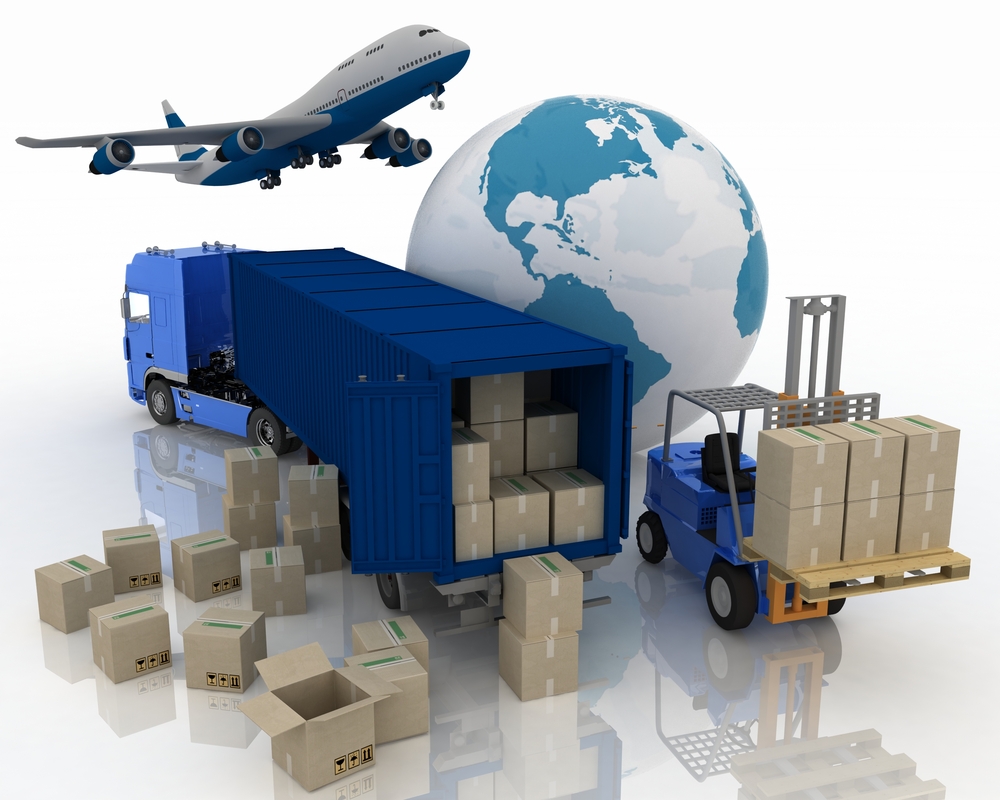
Given the services performed by logisticians, the main fields of logistics can be broken down as follows:
- Procurement logistics
- Production logistics
- Distribution logistics
- After-sales logistics
- Disposal logistics
- Reverse logistics
- Green logistics
- Global logistics
- Domestics logistics
- Concierge Service
- RAM logistics
Procurement logistics consists of activities such as market research, requirements planning, make-or-buy decisions, supplier management, ordering, and order controlling. The targets in procurement logistics might be contradictory: maximizing efficiency by concentrating on core competences, outsourcing while maintaining the autonomy of the company, or minimizing procurement costs while maximizing security within the supply process.
Production logistics connects procurement to distribution logistics. Its main function is to use available production capacities to produce the products needed in distribution logistics. Production logistics activities are related to organizational concepts, layout planning, production planning, and control.
Distribution logistics has, as main tasks, the delivery of the finished products to the customer. It consists of order processing, warehousing, and transportation. Distribution logistics is necessary because the time, place, and quantity of production differs with the time, place, and quantity of consumption.
Disposal logistics has as its main function to reduce logistics cost(s) and enhance service(s) related to the disposal of waste produced during the operation of a business.
Reverse logistics denotes all those operations related to the reuse of products and materials. The reverse logistics process includes the management and the sale of surpluses, as well as products being returned to vendors from buyers. Reverse logistics stands for all operations related to the reuse of products and materials. It is “the process of planning, implementing, and controlling the efficient, cost effective flow of raw materials, in-process inventory, finished goods and related information from the point of consumption to the point of origin for the purpose of recapturing value or proper disposal. More precisely, reverse logistics is the process of moving goods from their typical final destination for the purpose of capturing value, or proper disposal. The opposite of reverse logistics is forward logistics.”
Green Logistics describes all attempts to measure and minimize the ecological impact of logistics activities. This includes all activities of the forward and reverse flows. This can be achieved through intermodal freight transport, path optimization, vehicle saturation and city logistics.
RAM Logistics (see also Logistic engineering) combines both business logistics and military logistics since it is concerned with highly complicated technological systems for which Reliability, Availability and Maintainability are essential, ex: telecommunication systems and military supercomputers.